CHAOYE PACKAGING KNOWLEDGE · PET STRAPPING
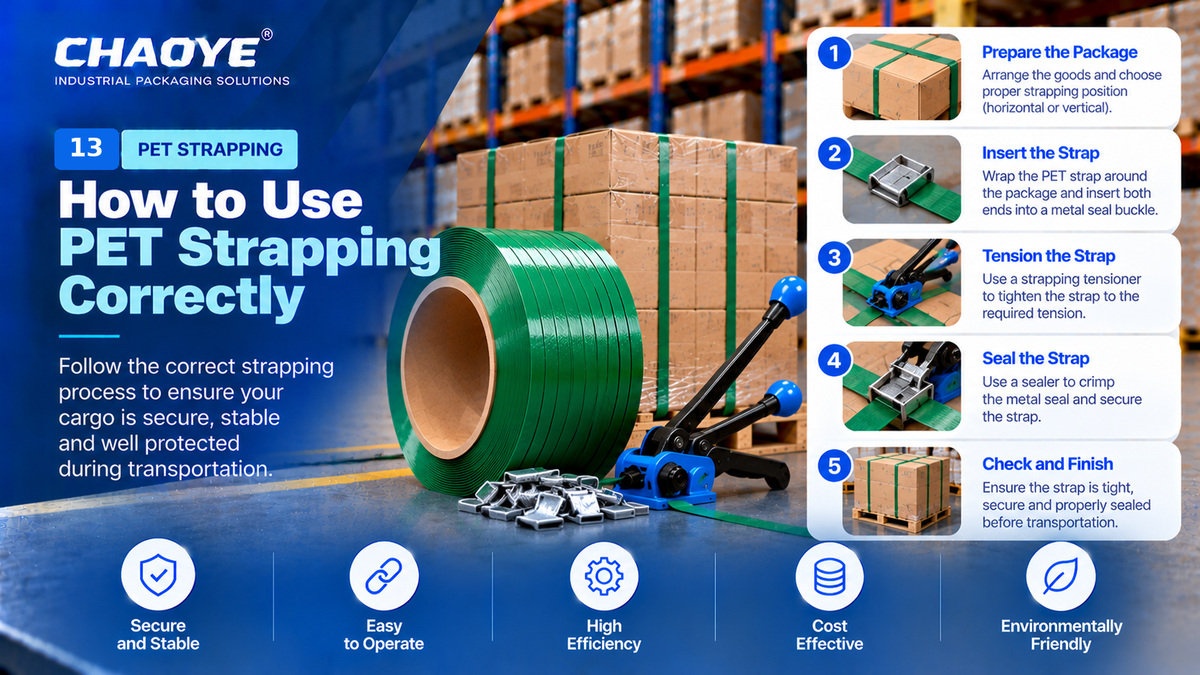
Compare PET and PP plastic strapping for cartons and palletized loads, including strength, elongation, and application.
1. What are PET and PP straps?
PET strapping is made from polyethylene terephthalate; PP strapping is made from polypropylene. Both are used to secure packages, but they are commonly selected for different load requirements and equipment setups.
2. How the application differs
PP strapping is frequently considered for lighter cartons and general packaging. PET strapping is often considered for heavier or more demanding palletized loads. These are broad usage patterns; actual suitability depends on the grade and measured strap properties.
3. Strength and elongation
Compare specified breaking strength, elongation, tension retention, and strap dimensions. The strongest strap is not automatically the safest choice: load edges, tensioning settings, seals, and package compressibility also affect results.
4. Tool and machine compatibility
Check whether existing tools support PET or PP and the exact strap width and thickness. Friction-weld tools, sealers, and automatic strapping machines have specific compatibility limits.
5. Buying checklist
Ask for width, thickness, nominal breaking strength, elongation, surface finish, color, coil weight, core dimensions, and packing format. Run a strapping trial with the actual load and handling process.
Frequently Asked Questions
Can I replace PP strap with PET without changing tools?
Not necessarily. Verify the tool and machine specifications first.
Is PET suitable for every heavy load?
No. A secure system requires the correct strap, joints, edge protection, and load design.
Buyer tip: Send suppliers your actual load dimensions, packaging equipment, expected order volume and shipping conditions. Confirm performance with representative samples before placing a production order.
Discuss Your Industrial Packaging Requirements
CHAOYE supplies stretch film, PET strapping and VCI packaging products. Share your application and specifications to request a quotation.
Request a Quote →