Technical note: Product performance, supported metals, protection duration and compliance claims must be confirmed against the selected supplier's technical documentation and application testing.
Step 1: Identify the Metal and Exposure Conditions
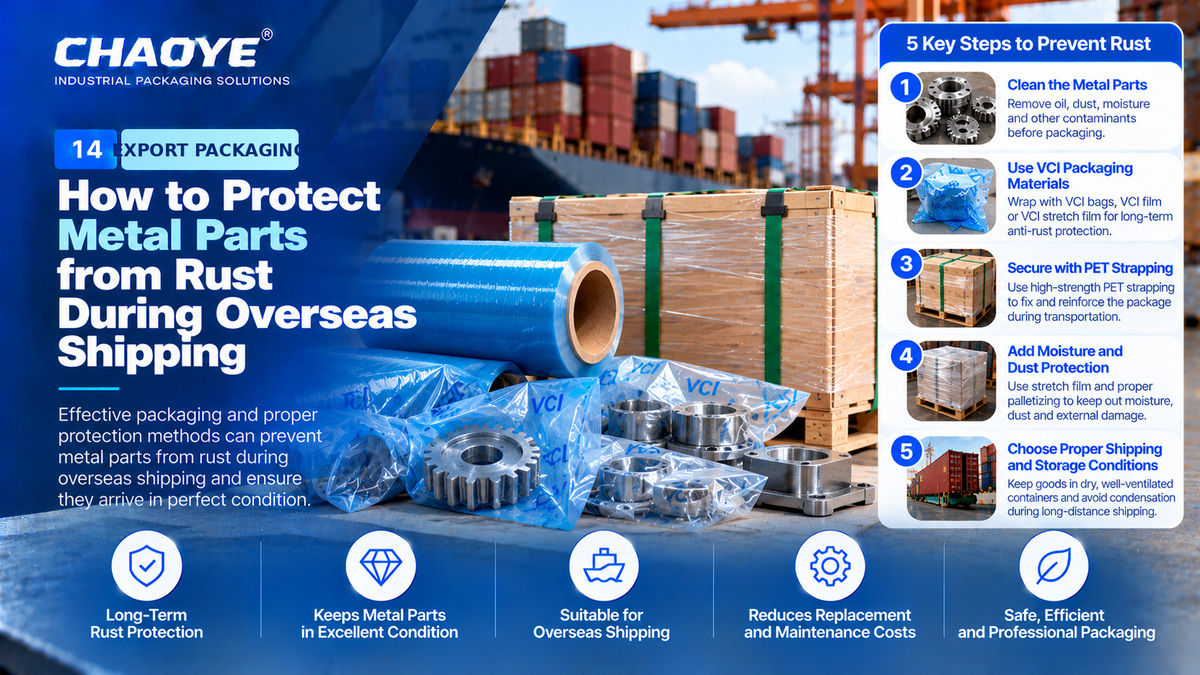
Record the metal alloy, surface finish, existing protective coatings, storage period, route, and expected temperature and humidity. Ask the supplier to confirm VCI compatibility before adopting the process.
Step 2: Clean Components
Remove contaminants using the part manufacturer’s approved cleaning method. Fingerprints, process fluids, salts, and residues may affect corrosion risk. Avoid introducing contaminants during handling.
Step 3: Dry Parts Completely
Do not trap free water inside the bag. Confirm that washing or machining fluids have been removed and that components have reached an appropriate dry condition before packaging.
Step 4: Select Bag Size and Film Construction
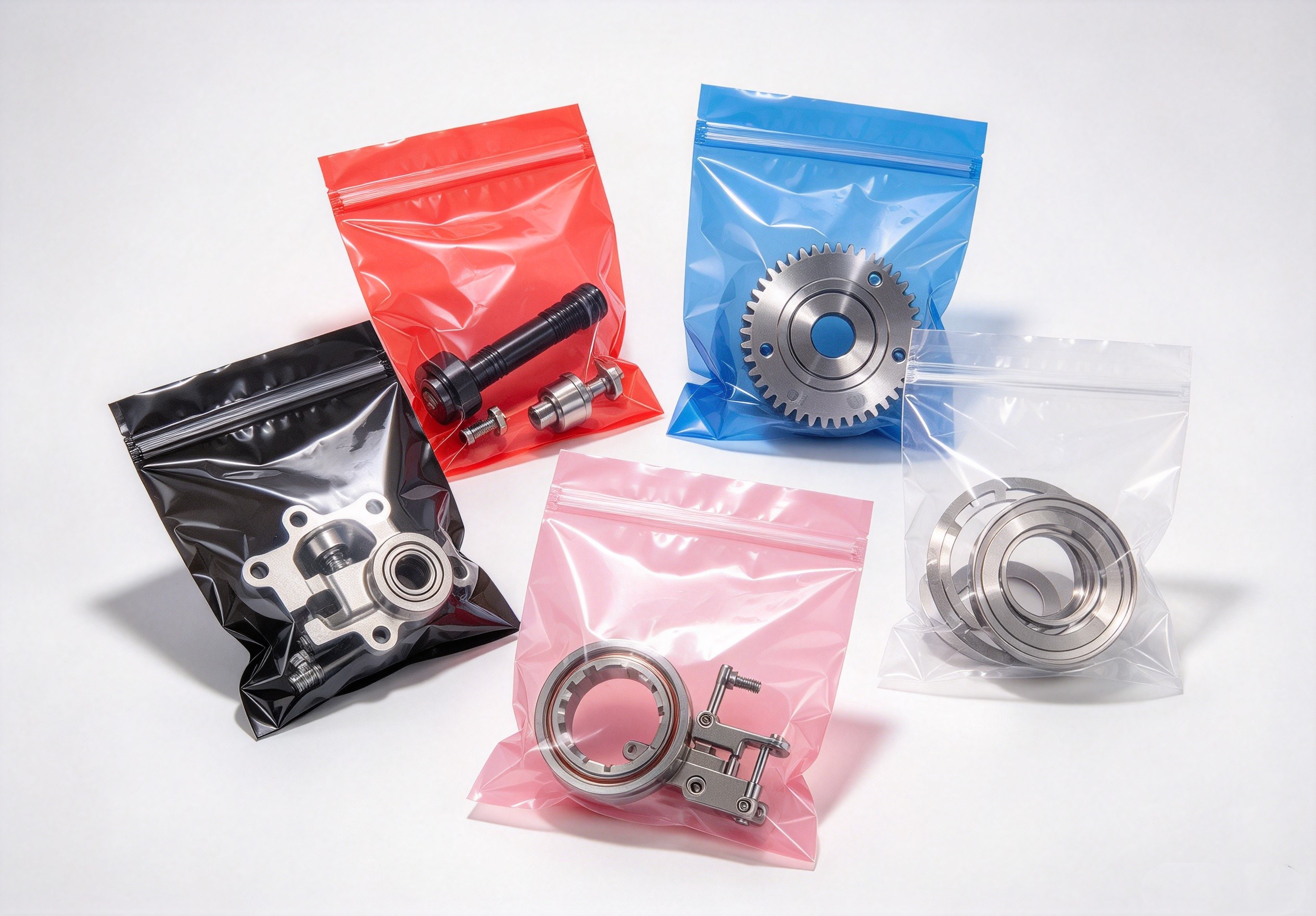
Allow enough room to insert parts without overstretching. Match thickness and puncture resistance to weight and sharp edges. Use cushioning, caps, or separators when necessary; thicker film alone does not guarantee better corrosion inhibition.
Step 5: Insert and Close the Bag
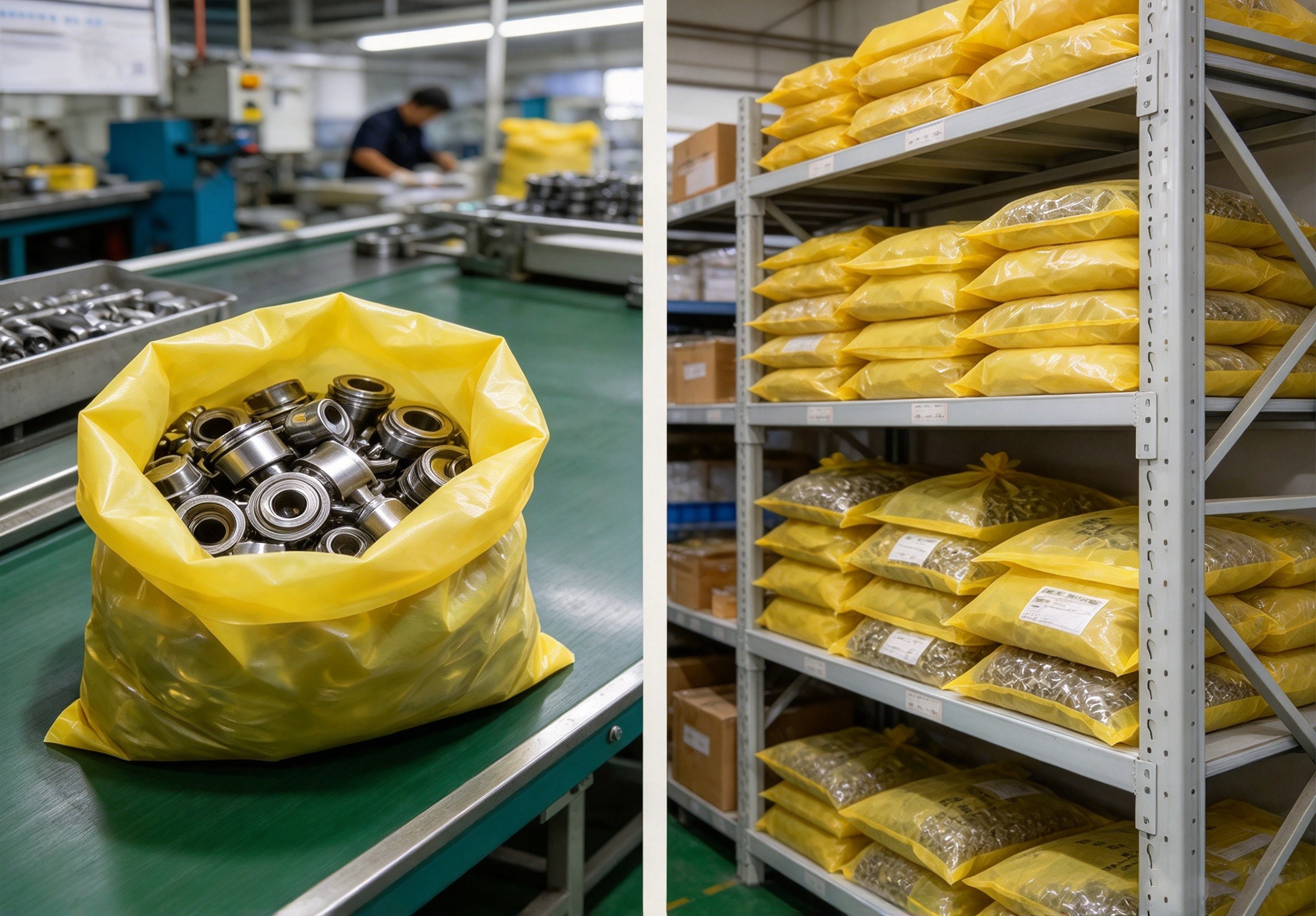
Place parts into the bag using clean handling practices. Close it as specified by the supplier—such as heat sealing or an approved zipper design. Check seams, corners, and potential punctures.
Step 6: Pack for Transport
Use an outer carton, crate, or pallet system suited to product weight and handling. Evaluate condensation, moisture barriers, desiccants, and shock protection where relevant. Follow the selected VCI supplier’s instructions for combining materials.
Step 7: Inspect and Document
Record bag specification, batch, packaging date, part type, and operator checks. For critical shipments, validate the method through appropriate testing or trial shipments.
Common Mistakes to Avoid
Do not bag wet parts, assume all VCI products protect all metals, use damaged bags, leave packaging open unnecessarily, or promise a fixed protection period without test evidence.
FAQ
Should a VCI bag be vacuum sealed? Not automatically; follow product-specific instructions. Can gloves be used? Clean gloves may reduce contamination. Should desiccants be added? Only as part of a compatible, evaluated packaging system.
Need VCI Packaging for Your Metal Parts?
Tell CHAOYE your metal type, dimensions, packing quantity, storage duration and shipping destination to discuss suitable options.
Request a Quote →Related VCI Packaging Guides
What Are VCI Bags and How Do They Work? VCI Bags vs VCI Paper: Which Is Better for Metal Packaging? How Long Do VCI Bags Last? Factors Affecting Protection Types of VCI Bags: Flat, Gusseted, Zipper and Pallet Covers